Key Features
Capital city as server hub
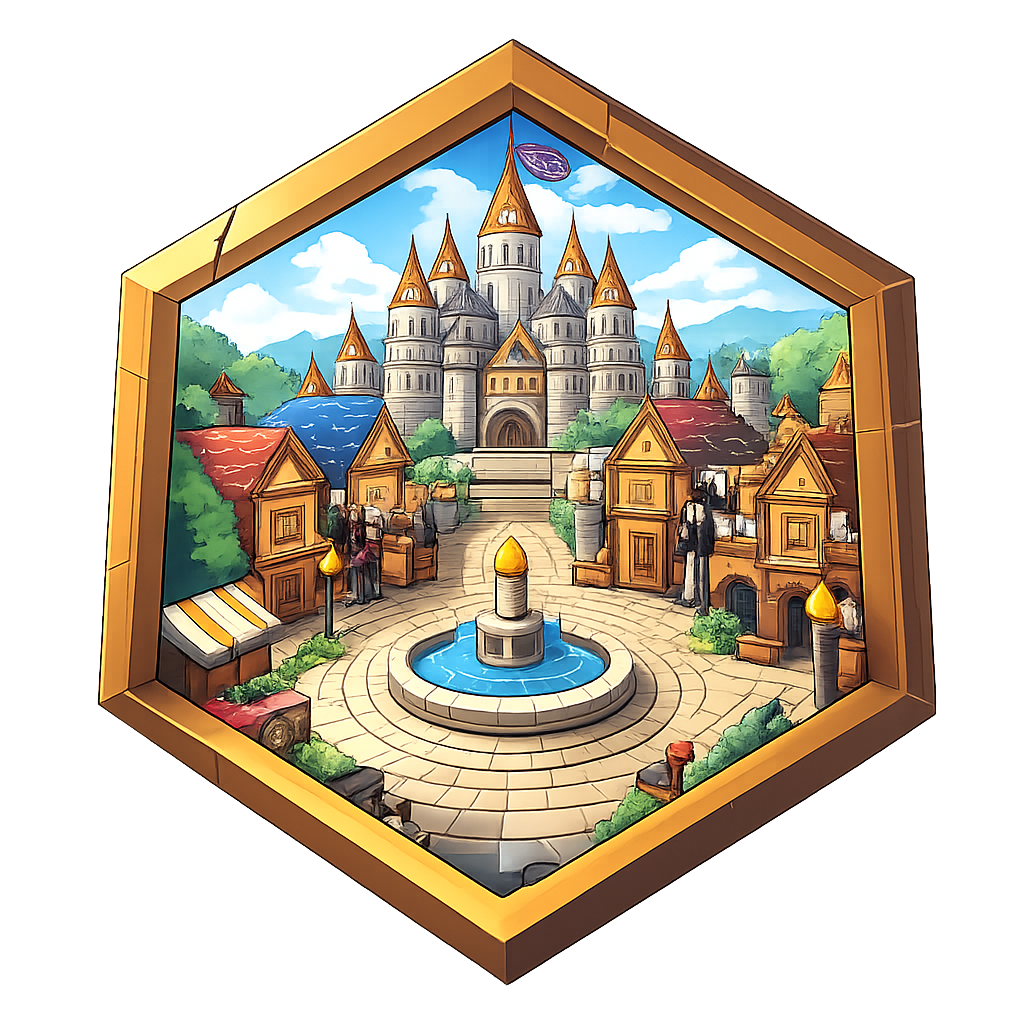
The capital city of Palandriel serves as the central hub of the entire server. Every player begins their journey here, surrounded by a living medieval-fantasy city filled with purpose, atmosphere, and opportunity.
From guild headquarters and profession halls to the marketplace, auction house, and dungeons hidden beneath the streets, the capital connects all major systems in one immersive location. Its distinct districts guide players naturally through progression, social interaction, and trade, making the city not just a spawn point, but the beating heart of the world.
Palandriel’s capital is designed to bring players together, encourage cooperation, and create a strong sense of belonging within a shared world.
Guilds
Guilds are the backbone of our community-driven experience. Players can join guilds that match their playstyle to conquer content together, expand their influence, and build a shared identity. Guilds unlock exclusive features such as cooperative objectives, guild-based bonuses, guild quests, hierarchical ranks, and competitive opportunities against rival guilds. Whether focused on PvE, PvP, or the economy, guilds offer long-term goals and meaningful social depth.
Despite rivalries between guilds, cooperation and interaction between players will ultimately be essential. Each guild offers guild-specific content and rewards that other guilds may depend on, making collaboration across guild boundaries a necessary part of progression. Whether focused on PvE, PvP, or the economy, guilds offer long-term goals and meaningful social depth.
Dungeons
Our world will be filled with handcrafted dungeons designed to challenge both solo players and coordinated groups. Each dungeon features unique mechanics, dangerous enemies, and powerful bosses that require strategy rather than brute force. Expect scalable difficulty, rare loot, and hidden secrets that reward exploration and mastery. Dungeons are a core part of progression and offer replayable content with meaningful rewards.
Dungeons will be primarily accessed through Dungeon Keys that open dedicated portals. These keys can be obtained as drops throughout the world, granted through dungeon-related quests, or discovered during dynamic random events. This system ensures that dungeon runs feel earned, varied, and naturally integrated into the world’s activities.
Player driven economy
The economy is entirely shaped by players. Resources are gathered, crafted, traded, and sold by the community with minimal artificial intervention. Supply and demand determine prices, making professions and market knowledge valuable assets. Every item has meaning, and player choices directly impact the economic landscape of the server.
While players drive the market, guilds naturally play a crucial role in shaping the economy as well. Through weekly, daily, and monthly missions, completed solo or as part of coordinated guild progression, guilds actively influence economic activity. System-generated guild quests provide rewards such as Paland (the server currency), items, and experience for guild ranks, reinforcing cooperation, long-term goals, and a living, player-driven world.
CUSTOM ITEMS & MOBS
Discover a world brought to life through custom-designed items and mobs. Weapons, armor, and tools come with unique abilities and playstyles, encouraging experimentation and specialization. Custom mobs introduce new combat challenges, behaviors, and lore, ensuring that encounters remain fresh and unpredictable. These additions are carefully balanced to enhance gameplay without breaking immersion.
Custom items are seamlessly integrated into both the core progression and specialized dungeon content. Within dangerous depths, players can mine unique ores to forge new tools, armor, and weapons, or challenge powerful bosses that guard rare and valuable equipment. This ensures that exploration and combat are consistently rewarding, tying progression, risk, and discovery closely together.
Claim, Build, Settle
Palandriel will offer a dedicated freebuild world where players are free to choose their own building locations and create settlements that truly feel like home. Whether playing solo or as part of a group, land can be claimed and protected, allowing communities, towns, and projects to grow naturally without predefined plots or limitations.
To preserve the world long-term, resource gathering is handled in a separate mining and farming world. This ensures fair access to materials, prevents landscape depletion, and keeps the freebuild world focused on creativity, immersion, and lasting player-built environments.
What will already be available at Hytale’s game release?
Honestly? Nothing — at least not in the traditional sense. As the name of this page already suggests, Palandriel is currently a concept.
Our goal is to put the community at the center of the project and to develop Palandriel together with you. Because of this collaborative approach, individual features, ideas, or content may change over time as the project evolves.
To ensure transparency, we will publish a Milestones page on the website. This page will clearly outline what we are planning first, what will be developed next, and how the project is progressing overall.
Palandriel is not something we simply deliver — it’s something we build with the community.
What can I realistically expect shortly after Hytale’s release?
Shortly after Hytale’s release, our focus will be on establishing the core foundations of the project.
This includes essential systems such as:
- An anti-grief system (claiming and protection mechanics)
- The creation of a central hub as a starting and connection point
- The setup of our economy system, which will serve as the backbone for progression and interaction
These fundamentals are necessary to create a stable environment before expanding into more complex content. As with all aspects of Palandriel, these systems will be developed transparently and may evolve based on community feedback.
How long will it take to see all planned features in-game?
Unfortunately, this is not an easy question to answer.
According to Simon, one of Hytale’s co-founders, the game is currently still in a very unfinished state. As a server project, our development is closely tied to the ongoing development of Hytale itself, meaning we have to work with whatever tools, systems, and limitations the game provides over time.
That said, our internal goal is to implement the core features within approximately 12 to 16 months after release. However, due to the evolving nature of Hytale’s development, we cannot make any guarantees.
Transparency and adaptability are key principles of Palandriel, and timelines may shift as the game and the project continue to grow.
Key Features
Capital city as server hub
The capital city of Palandriel serves as the central hub of the entire server. Every player begins their journey here, surrounded by a living medieval-fantasy city filled with purpose, atmosphere, and opportunity.
From guild headquarters and profession halls to the marketplace, auction house, and dungeons hidden beneath the streets, the capital connects all major systems in one immersive location. Its distinct districts guide players naturally through progression, social interaction, and trade, making the city not just a spawn point, but the beating heart of the world.
Palandriel’s capital is designed to bring players together, encourage cooperation, and create a strong sense of belonging within a shared world.
Guilds
Guilds are the backbone of our community-driven experience. Players can join guilds that match their playstyle to conquer content together, expand their influence, and build a shared identity. Guilds unlock exclusive features such as cooperative objectives, guild-based bonuses, guild quests, hierarchical ranks, and competitive opportunities against rival guilds. Whether focused on PvE, PvP, or the economy, guilds offer long-term goals and meaningful social depth.
Despite rivalries between guilds, cooperation and interaction between players will ultimately be essential. Each guild offers guild-specific content and rewards that other guilds may depend on, making collaboration across guild boundaries a necessary part of progression. Whether focused on PvE, PvP, or the economy, guilds offer long-term goals and meaningful social depth.
Dungeons
Our world will be filled with handcrafted dungeons designed to challenge both solo players and coordinated groups. Each dungeon features unique mechanics, dangerous enemies, and powerful bosses that require strategy rather than brute force. Expect scalable difficulty, rare loot, and hidden secrets that reward exploration and mastery. Dungeons are a core part of progression and offer replayable content with meaningful rewards.
Dungeons will be primarily accessed through Dungeon Keys that open dedicated portals. These keys can be obtained as drops throughout the world, granted through dungeon-related quests, or discovered during dynamic random events. This system ensures that dungeon runs feel earned, varied, and naturally integrated into the world’s activities.
Player driven economy
The economy is entirely shaped by players. Resources are gathered, crafted, traded, and sold by the community with minimal artificial intervention. Supply and demand determine prices, making professions and market knowledge valuable assets. Every item has meaning, and player choices directly impact the economic landscape of the server.
While players drive the market, guilds naturally play a crucial role in shaping the economy as well. Through weekly, daily, and monthly missions, completed solo or as part of coordinated guild progression, guilds actively influence economic activity. System-generated guild quests provide rewards such as Paland (the server currency), items, and experience for guild ranks, reinforcing cooperation, long-term goals, and a living, player-driven world.
CUSTOM ITEMS & MOBS
Discover a world brought to life through custom-designed items and mobs. Weapons, armor, and tools come with unique abilities and playstyles, encouraging experimentation and specialization. Custom mobs introduce new combat challenges, behaviors, and lore, ensuring that encounters remain fresh and unpredictable. These additions are carefully balanced to enhance gameplay without breaking immersion.
Custom items are seamlessly integrated into both the core progression and specialized dungeon content. Within dangerous depths, players can mine unique ores to forge new tools, armor, and weapons, or challenge powerful bosses that guard rare and valuable equipment. This ensures that exploration and combat are consistently rewarding, tying progression, risk, and discovery closely together.
Claim, Build, Settle
Palandriel will offer a dedicated freebuild world where players are free to choose their own building locations and create settlements that truly feel like home. Whether playing solo or as part of a group, land can be claimed and protected, allowing communities, towns, and projects to grow naturally without predefined plots or limitations.
To preserve the world long-term, resource gathering is handled in a separate mining and farming world. This ensures fair access to materials, prevents landscape depletion, and keeps the freebuild world focused on creativity, immersion, and lasting player-built environments.
What will already be available at Hytale’s game release?
Honestly? Nothing — at least not in the traditional sense. As the name of this page already suggests, Palandriel is currently a concept.
Our goal is to put the community at the center of the project and to develop Palandriel together with you. Because of this collaborative approach, individual features, ideas, or content may change over time as the project evolves.
To ensure transparency, we will publish a Milestones page on the website. This page will clearly outline what we are planning first, what will be developed next, and how the project is progressing overall.
Palandriel is not something we simply deliver — it’s something we build with the community.
What can I realistically expect shortly after Hytale’s release?
Shortly after Hytale’s release, our focus will be on establishing the core foundations of the project.
This includes essential systems such as:
- An anti-grief system (claiming and protection mechanics)
- The creation of a central hub as a starting and connection point
- The setup of our economy system, which will serve as the backbone for progression and interaction
These fundamentals are necessary to create a stable environment before expanding into more complex content. As with all aspects of Palandriel, these systems will be developed transparently and may evolve based on community feedback.
How long will it take to see all planned features in-game?
Unfortunately, this is not an easy question to answer.
According to Simon, one of Hytale’s co-founders, the game is currently still in a very unfinished state. As a server project, our development is closely tied to the ongoing development of Hytale itself, meaning we have to work with whatever tools, systems, and limitations the game provides over time.
That said, our internal goal is to implement the core features within approximately 12 to 16 months after release. However, due to the evolving nature of Hytale’s development, we cannot make any guarantees.
Transparency and adaptability are key principles of Palandriel, and timelines may shift as the game and the project continue to grow.
Guilds
What are guilds?
Guilds in Palandriel are player-driven factions that focus on different aspects of Hytale and the server’s core concept. They form the social and economic backbone of the world and encourage cooperation, specialization, and long-term progression.
Choosing a guild does not lock players out of content. All players can explore the world, fight monsters, and participate in the game’s systems. However, guild membership determines where your character excels. Players who are not part of a specific guild will simply miss out on certain passive bonuses, such as boosts to resource drops, crafting quality, or loot chances from monsters and bosses.
Each guild is carefully designed to offer unique advantages without creating disadvantages. No guild is strictly better than another, and none offers exclusive experiences that others can never access. Instead, guilds promote interdependence: adventurers rely on crafters for high-end equipment, while crafters depend on adventurers for rare materials.
We place strong emphasis on avoiding common concerns such as missed opportunities, fear of missing out, or restricted gameplay. Guilds are meant to enhance your preferred playstyle, not limit it.
Palandriel’s guild system exists to strengthen cooperation, player identity, and the overall living world experience.
Which guilds will be available?
At launch (of the guild system), Palandriel will feature two main guilds: the Adventurers’ Guild and the Crafters’ Guild.
- The Crafters’ Guild focuses on crafting, gathering mineable resources, farming and cultivating crops, and building structures.
- The Adventurers’ Guild is centered around combat, defeating monsters and bosses, exploring the world, and clearing dungeons.
Each guild offers guild-specific professions and quests that align with its role and playstyle. However, players are not strictly locked to their guild’s content. Members of one guild may still take on professions and quests from the other guild.
That said, doing so comes with trade-offs: players will receive no passive bonuses, reduced experience, and slightly altered or fewer rewards when engaging in content outside their chosen guild’s specialization.
Because this system applies equally in both directions, for Adventurers and Crafters alike, it is designed to avoid feelings of disadvantage or forced choices. Instead, it reinforces specialization while keeping the overall experience fair and flexible.
The goal is clear: guilds should define where you shine, not what you are forbidden from doing.
Will there be guild ranks?
Yes, Palandriel will feature a structured guild rank system.
Guild ranks unlock additional depth and progression, including:
- Access to new professions
- New and more complex quests
- Profession- and quest-related bonuses
- Access to higher-tier dungeons
- Various passive stat bonuses
Guild ranks are progressed through a combination of active participation, experience gain, and rank trials, reflecting a player’s commitment and mastery within their chosen guild.
Currently, four guild rank tiers are planned. Each tier represents a meaningful step forward and is designed to reinforce long-term progression without overwhelming players early on.
As with all systems in Palandriel, the exact implementation may evolve based on gameplay experience and community feedback, but the core idea remains: guild ranks should feel earned, impactful, and rewarding.
Will I be able to change my guild?
Yes. If you are unhappy with your guild choice, your playstyle changes over time, or you simply want to remain flexible, you will be able to switch guilds at defined intervals (e.g. all 24h).
However, changing guilds comes with important limitations to preserve balance and commitment:
- Guild experience is not transferable to the new guild.
- Your progress in the previous guild will remain recorded, but switching guilds will result in a 25% progress reduction.
- In addition, you may lose up to one guild rank when switching.
These rules are designed to offer flexibility without encouraging constant guild-hopping. Choosing a guild should feel meaningful, but never irreversible. Palandriel aims to balance player freedom with long-term progression and identity within the guild system.
As always, exact values and mechanics may be adjusted based on gameplay experience and community feedback.
Can I play solo, or is a guild mandatory?
You can absolutely play solo in Palandriel. While choosing a guild is required, you are not forced to actively interact with other players in order to enjoy the core gameplay, explore the world, or progress through the server’s systems. Additional mechanics are designed to support independent and flexible playstyles.
That said, Palandriel is built around cooperation and specialization. Guilds enhance your efficiency by providing passive bonuses, access to specialized professions, and tailored quests. Players who engage heavily in content outside their guild’s focus will still be able to participate, but their progression may be slower or less efficient.
Certain high-level activities, such as advanced dungeons or endgame crafting chains, are intentionally designed to benefit from cooperation between different playstyles. These systems are meant to encourage collaboration, not to force it.
In short:
You can play alone, at your own pace.
However, Palandriel remains a multiplayer experience, and joining a guild helps you excel in a specific role within the living world of Palandriel.
Will guild choice affect PvP or competitive gameplay?
Guild choice in Palandriel is designed to have no direct or unfair impact on PvP or competitive gameplay.
Guilds are structured horizontally, not vertically. This means that no guild is objectively stronger than another in competitive situations. Instead of raw power advantages, guilds provide situational and role-based bonuses that align with specific playstyles, such as combat efficiency, resource acquisition, or crafting specialization.
In PvP or competitive environments, balance is a key priority. Passive guild bonuses are carefully designed to avoid creating dominant metas or mandatory choices. Skill, preparation, equipment, and coordination will always matter more than guild affiliation alone.
Additionally, Palandriel’s competitive systems are built with the goal of fair participation. No player should feel forced to choose a specific guild in order to remain viable or competitive.
In short:
Your guild defines how you contribute, not how strong you are.
Competitive gameplay in Palandriel is intended to be fair, skill-driven, and flexible, regardless of guild choice.
Dungeons
What are dungeons?
Dungeons in Palandriel are separated areas found either directly in the open world (planned server hub world) or as instanced locations accessed through portals.
Within dungeons, players can pursue a variety of goals, including:
- Exploration and discovery
- Gathering specific resources
- Fighting monsters and bosses
- Completing dungeon-specific objectives or challenges
Dungeons will appear in different types and formats, ranging from smaller, accessible locations to larger, more complex challenges that require preparation and coordination. Some dungeons are designed for solo play, while others are intended to reward group play and cooperation between different playstyles.
Each dungeon type is built to feel meaningful and integrated into the world of Palandriel, offering unique encounters, rewards, and progression opportunities rather than serving as repetitive content.
As with all systems, dungeon mechanics and variety will expand over time as the project evolves.
What do dungeons offer? What is their purpose?
The core goal is, of course, fun, even if that might not be the answer you expected.
Beyond that, dungeons in Palandriel serve several important purposes. They are designed to:
- Provide access to unique and rare items
- Offer puzzle-solving challenges, both solo and cooperative
- Enable resource farming that cannot be done efficiently elsewhere
- Contribute to guild progression and guild-related challenges
- Support long-term character and economic progression
Dungeons are more than just combat encounters. They are meant to combine exploration, strategy, problem-solving, and cooperation into meaningful gameplay experiences that feel rewarding rather than repetitive.
Whether you enter a dungeon alone or with others, each run should push your progression forward in some way, be it through loot, knowledge, guild advancement, or simply mastering the challenge itself.
As Palandriel evolves, dungeon content will continue to expand in depth, variety, and impact.
What types of dungeons will be available?
Palandriel will feature a variety of dungeon experiences, which are divided into two main categories: Single Dungeons and Progression Dungeons.
Single Dungeons
Single Dungeons offer a more classic dungeon experience. Each run is self-contained and resets after completion. Players can enter these dungeons to:
- Farm specific resources or materials
- Defeat monsters and bosses for loot
- Solve puzzles or complete short objectives
They are ideal for repeatable content, daily activities, and both solo and group play.
Progression Dungeons
Progression Dungeons are designed as long-term challenges. Progress made inside these dungeons is saved at defined checkpoint or save points, allowing players to return and continue where they left off.
These dungeons may feature:
- Multiple floors or stages that increase in difficulty
- A story or narrative that unfolds as you progress
- Escalating mechanics, enemy types, or environmental hazards
- Decisions that influence future encounters or paths
Progression Dungeons are meant to feel like an ongoing journey rather than a single run, rewarding persistence, preparation, and mastery.
Additional planned elements
To keep dungeon gameplay engaging and varied, Palandriel may also introduce:
- Dungeon modifiers (e.g. stronger enemies, limited resources, altered mechanics)
- Role-focused challenges, where different playstyles shine in different sections
- Guild-related dungeon objectives, contributing to guild progression
- Timed or event-based dungeon variations for competitive or seasonal play
All dungeon types are designed to be technically feasible for a game server while still offering depth, replayability, and meaningful progression.
As with all systems in Palandriel, dungeon designs will evolve over time based on gameplay experience and community feedback.
Can dungeons be played solo or only in groups?
Both – dungeons in Palandriel are designed to support solo play as well as group play.
Some dungeons are intentionally built to be solo-friendly, allowing players to progress at their own pace, focus on exploration, puzzles, or smaller combat encounters. These dungeons are ideal for players who prefer independent gameplay or shorter play sessions.
Other dungeons, especially higher-tier or progression-based dungeons, are designed to benefit strongly from group play. While they may still be technically possible to attempt alone, cooperation between different playstyles will significantly improve efficiency, survivability, and success.
Dungeon difficulty may scale depending on the dungeon type, mechanics, or objectives, but Palandriel avoids hard-locking players into group-only content whenever possible. The intent is to reward cooperation, not enforce it.
In short:
- You can enter dungeons alone.
- You will often progress further and more efficiently with others.
This approach ensures that dungeons remain accessible while still encouraging teamwork and meaningful multiplayer interaction.
Do dungeons reset, and how often can I run them?
Yes, dungeons in Palandriel do reset, but how and when depends on the dungeon type.
Single Dungeons are designed to be repeatable content. They reset after completion or after a defined cooldown, allowing players to run them multiple times for resources, loot, or practice. These resets help keep dungeon gameplay engaging while maintaining balance within the economy.
Progression Dungeons work differently. Progress made inside these dungeons is saved at specific checkpoints. You do not lose your progress when leaving or failing, and you can return later to continue where you left off. Full resets, if they occur at all, are tied to major milestones such as completing the dungeon, story progression, or special events.
Reset timers, cooldowns, and access limits are designed with long-term motivation and fairness in mind. The goal is to prevent excessive grinding while still rewarding dedication and repeated play.
In short:
Single Dungeons reset regularly and are meant to be replayed.
Progression Dungeons preserve your progress and focus on long-term advancement.
Exact reset mechanics may evolve over time as Palandriel grows and gameplay data and community feedback are taken into account.
Economy
How does the economy work in Palandriel?
The economy in Palandriel is designed to be player-driven, progressive, and deeply interconnected with the server’s core systems such as guilds, professions, and dungeons.
At its foundation, Palandriel uses a structured currency system that supports long-term progression and meaningful trade. Players earn currency through activities like crafting, gathering resources, completing quests, clearing dungeons, and participating in the wider economy.
A central element of the economy is the marketplace, where players can trade directly with each other. This includes player-run shops, market stalls, and an auction-style system that allows supply and demand to naturally shape prices. NPC traders exist mainly as price anchors, ensuring stability without replacing player trade.
To add additional depth, Palandriel also features a black market. This system offers access to rare items, special materials, or unique opportunities that cannot be obtained through standard trading alone. The black market is intentionally limited and tied to higher-risk or higher-effort activities, such as advanced dungeons or special events, making it a complementary layer rather than a replacement for the main economy.
Guilds and professions play a crucial role in keeping the economy alive. Crafters depend on adventurers for rare materials, while adventurers rely on crafters for high-quality equipment. This interdependence ensures that no single playstyle can fully sustain itself, encouraging cooperation, trade, and social interaction.
Overall, the goal of Palandriel’s economy is not instant wealth, but a living system that rewards activity, specialization, and collaboration over time, without becoming pay-to-win or overly grind-heavy.
Which currencies will exist in Palandriel, and how can I obtain them?
Palandriel features a multi-layered currency system designed to support a healthy economy, long-term progression, and meaningful decision-making.
Paland – The main in-game currency
Paland is the primary currency and the backbone of the economy. It is used for most forms of trading, crafting services, marketplace transactions, and general progression.
Paland can be earned through a wide range of activities, including:
- Professions such as crafting, gathering, and farming
- Completing quests and guild tasks
- Clearing dungeons and dungeon-related objectives
- Player trading, shops, and marketplace activity
- Events and other gameplay systems
Paland is intentionally designed to be earned only through gameplay, ensuring a fair and player-driven economy.
Black Market Currency – A secondary progression layer
In addition to Paland, a black market currency is planned. This secondary currency is designed to add depth and alternative progression paths to the economy.
The black market currency will be:
- Earned primarily through advanced dungeons, special encounters, or events
- Used to access rare items, unique materials, or exclusive offers not available through the regular market
- More limited in circulation, making it valuable and meaningful
This system allows high-risk or high-effort activities to feel especially rewarding without undermining the main economy.
Economic philosophy
The separation between Paland and the black market currency helps prevent inflation, avoids pay-to-win mechanics, and ensures that different playstyles contribute to the overall economic loop.
In short:
- Paland keeps the world running.
- The black market adds depth, risk, and rare opportunities.
As with all systems in Palandriel, exact values and sources may evolve based on gameplay experience and community feedback.
Can one playstyle dominate the economy?
No, Palandriel’s economy is intentionally designed so that no single playstyle can dominate or sustain itself on its own.
The economic system is built around interdependence between different roles, guilds, and activities. Crafters, gatherers, farmers, dungeon runners, and explorers all rely on each other to keep the economy functioning.
For example:
- High-end crafting requires rare materials that can only be obtained through dungeons or challenging encounters.
- Adventurers depend on crafters for powerful equipment, tools, and consumables.
- Resource-focused playstyles benefit from combat-oriented players who supply rare drops and black market currency.
While certain activities may be more profitable at specific times, no profession or playstyle is designed to be permanently superior. Balancing mechanisms such as resource sinks, progression limits, dungeon access, and guild-based bonuses ensure that wealth generation remains distributed and dynamic.
The goal is not to force players into a single “best” way to play, but to reward specialization, cooperation, and smart trading. Economic success in Palandriel comes from understanding the system, not from exploiting one dominant strategy.
In short:
- You can specialize.
- You can excel.
- But you cannot control the economy alone.
Will there be player shops, auctions, or trading hubs?
Yes. Palandriel’s economy is built around player-to-player trade, and several systems are in place to support this.
The central trading hub is located in the capital of Palandriel, where players can interact, exchange goods, and access key economic features. This area serves as the heart of commerce and social interaction.
Planned trading systems include:
- Player-run shops, allowing players to sell goods at fixed prices
- A marketplace and auction system, enabling competitive bidding and flexible pricing
- Designated trading areas that naturally bring players together
In addition, NPC traders exist as price anchors. They buy and sell certain goods at fixed values to help stabilize the market, but they are intentionally limited so they do not replace player-driven trade.
Over time, the economy may expand to include additional or regional trading hubs, depending on server growth and gameplay needs. However, the core philosophy remains the same: players shape the market, not the system.
These tools ensure that trading feels accessible for casual players while still offering depth and opportunity for dedicated merchants and economic specialists.
Custom Items & Mobs
Custom Items & Mobs – Unique Challenges, Meaningful Gear
Palandriel expands the world of Hytale with handcrafted items and creatures that go far beyond the vanilla experience. Custom mobs introduce new mechanics, abilities, and group-based challenges, turning combat into a strategic and cooperative experience rather than a simple numbers game.
Custom items are designed with purpose. Specialized weapons, armor sets with unique bonuses, and profession-focused tools allow players to adapt to specific enemies, environments, and playstyles. Progression is driven by preparation, teamwork, and smart choices, not randomness or pay-to-win mechanics.
Every encounter matters, and every piece of gear tells a story.
What are custom items in Palandriel?
Custom items in Palandriel are server-specific items designed to expand and deepen Hytale’s core gameplay without replacing or overpowering it.
These items go beyond standard equipment by offering unique effects, specialized bonuses, or situational advantages. Rather than simply providing higher raw stats, custom items are designed to support specific playstyles, roles, and progression paths, such as dungeon exploration, high-end crafting, or guild-focused activities.
Custom items can include:
- Specialized weapons and armor with unique properties
- Tools tailored to specific resources or professions
- Items with set bonuses or contextual effects
- Rare or unique items tied to dungeons, events, or progression systems
Importantly, custom items are not intended to invalidate base Hytale items. Instead, they complement existing systems, offering meaningful choices rather than mandatory upgrades.
Their availability and power are carefully balanced and often tied to effort, cooperation, or progression. This ensures that custom items feel rewarding and valuable, while maintaining fairness and long-term balance within Palandriel’s economy and gameplay loop.
In short:
Custom items add depth, identity, and specialization, not power creep.
Can custom items be crafted, upgraded, or traded?
Yes, depending on the item, custom items in Palandriel can be crafted, upgraded, and traded, but not all items follow the same rules.
Many custom items are deeply integrated into the profession and guild systems. Crafters may be able to create or refine certain custom items using rare materials obtained from dungeons, events, or the black market. Higher-tier or specialized items often require cooperation between different playstyles, such as adventurers supplying rare drops and crafters performing the final upgrades.
Upgrading custom items is planned as a progressive system rather than a simple stat increase. Upgrades may unlock new effects, improve efficiency, or enhance situational bonuses, encouraging long-term investment without creating unchecked power scaling.
Trading depends on the item’s role:
- Many custom items and materials are fully tradable, supporting a healthy player-driven economy.
- Some powerful or progression-critical items may be bind-on-use or bind-on-pickup to preserve balance and meaningful progression.
This approach ensures that custom items remain valuable, integrated into the economy, and tied to gameplay effort, not shortcuts.
In short:
Custom items are part of the crafting loop, the economy, and long-term progression — but always within clearly defined and balanced limits.
What are custom mobs?
Custom mobs in Palandriel are server-specific creatures designed to expand Hytale’s combat, exploration, and dungeon gameplay beyond standard encounters.
Unlike regular mobs, custom mobs feature unique abilities, behaviors, and mechanics that require players to adapt their strategies. They are not just stronger versions of existing enemies, but are designed to introduce new challenges such as special attacks, environmental interactions, or cooperative mechanics.
Custom mobs can be encountered in:
- Dungeons and progression-based challenges
- Specific open-world regions
- Special events or high-risk areas
Some custom mobs are designed to be tackled solo, while others are intentionally balanced around group play, encouraging coordination and role specialization.
Defeating custom mobs is often tied to meaningful rewards, such as rare materials, unique loot, or progression-related items that feed directly into crafting, the economy, and guild advancement.
In short:
Custom mobs make combat more dynamic, strategic, and rewarding, turning encounters into memorable challenges rather than routine fights.